
Key Takeaways: Workforce Predictions for 20226
- ✔Simplifying tech stacks saves time and money: Small businesses will ditch fragmented workforce tools for all-in-one platforms to avoid sync errors, training costs, and payroll delays.
- ✔Gen Z demands consumer-level software: Young managers expect mobile-first, chat-like, real-time tools and won’t tolerate outdated systems.
- ✔Smart scheduling stops burnout and turnover: Modern systems will track skipped breaks, unstable shifts, and ignored PTO to flag burnout before people quit.
- ✔Payroll errors destroy trust: Transparent previews, anomaly detection, and self-service corrections will be key to preventing employee resentment.
Hey there, I'm Dean Mathews, founder and CEO of OnTheClock. I started this company in 2004 after noticing small businesses desperately needed a better way to track employee time.
Now, over 20 years into this journey, I've had a front-row seat to how small businesses manage their teams, what works, what breaks, and what needs to evolve. We serve more than 16,000 businesses and 160,000 people worldwide, and every day I see the real challenges you're facing: integration nightmares, payroll errors that destroy trust, scheduling chaos, and tools that promise everything but deliver friction.
I'm going to start contributing regularly to this blog because I think the workforce management industry is at an inflection point. Some of the predictions you're about to read might sound wild, and a few might make you uncomfortable, but I've learned that the businesses willing to test what everyone else thinks is impossible are the ones that end up defining the future.
One of my guiding principles comes from an African proverb: "If you want to go fast, go alone; if you want to go far, go together." These predictions are about going far together with our customers, our team, and everyone who believes work can be better.
Table of Contents
The Big Picture
While most businesses are preparing for what's likely to occur in 2026, a handful will dominate by moving first on what everyone else thinks is impossible.
While you're consolidating your tech stack and measuring schedule fairness, someone else is building and using daily continuous payroll and employee rating systems, and they're about to become the employer everyone wants to work for.
Part 1: The Seven Shifts Most Likely to Hit in 2026
1. The Great Simplification: Small Businesses Dump Bloated Tool Stacks
What's happening: Many businesses will aim to consolidate their workforce management tools this year, reducing the number of integrated platforms from six or seven to two to three by the end of 2026.
The breaking point:
- API sync failures delay payroll runs
- Duplicate data entry across multiple systems
- Training costs multiply across tool-specific interfaces
- Employees can't remember which app to use for what
By the numbers: A $29/month time tracking app becomes a $500/month problem when you add:
- Three hours per week fixing sync errors
- Five hours per month training new hires on multiple systems
- Payroll errors from mismatched data sources and errors in spreadsheet formatting
The bottom line: The cheapest employee time clock becomes the most expensive when integrations break.
What to do: Choose workforce management software that combines time tracking, employee scheduling, and payroll in one system. Stop maintaining integrations and doing manual work in spreadsheets.
2. Gen Z Managers Evolve Beyond Legacy Workforce Management Tools
What's happening: Young supervisors are demanding time and attendance software that matches the usability, design, and flow of consumer-grade apps.
What they expect:
- Chat-like workflows: "Who can cover Friday?" not multistep dashboards;
- Real-time everything: Live labor cost tracking, not end-of-week reports;
- Mobile-first design: Approve time sheets from anywhere; and
- Instant feedback: Know the impact of a schedule change immediately.
Why legacy tools fail: Gen Z managers raised on Uber and Spotify find legacy platforms unbearably slow and complicated. The platforms will not meet the needs of managers who prioritize comprehensive dashboards.
The wake-up call: When managers spend more time navigating your time clock software than actually managing, you've lost.
What to do: Ask managers under 30: "What do you hate about our current system?" Their answers reveal which "powerful features" are productivity killers.
3. Operational Dashboards Now Include Burnout Risk Scoring
What's happening: Employee time tracking software identifies burnout risk by analyzing patterns, such as skipped breaks, consecutive shifts, unused PTO, and overtime trends.
Warning signals in 2026:
- An employee who skips breaks three-plus shifts in a row;
- Too many closing-to-opening shift combinations;
- No PTO used in six-plus months; and
- Gradual weekly hour increases.
Why this matters: You only tend to recognize burnout after an employee quits. Proactive systems flag issues weeks earlier.
The ROI: Replacing an hourly employee costs $3,000 to $5,000. A time and attendance system that prevents one employee from quitting per year pays for itself five times over.
What to do: Choose employee time clock systems that analyze patterns and help you make decisions, not just store timestamps.
4. Bid-and-Claim Scheduling Trumps Managers "Begging" for Coverage
What's happening: Unclaimed shifts trigger automated premium pay increases (surge salary) until the shift is accepted.
How it works:
- A manager posts jobs based on need: "We need three cashiers on Friday, 5-11 p.m., and we’re offering $18/hour;"
- Employees claim shifts that fit their availability;
- The system validates overtime and compliance rules;
- After 24 hours unclaimed, the rate for that specific job jumps to $20/hour; and
- Critical gaps trigger "bounty" premium rates of up to $30/hour.
Why this wins:
- No more manager begging: Stop texting 15 people to cover call-outs
- Fewer no-shows: Employees commit to shifts of their choosing
- Fair distribution: Everyone sees bounty shifts; first to claim wins
- Cost optimization: Only pay premiums when necessary
The retention play: Schedule control without sacrificing coverage.
What to do: Staff scheduling software should include shift marketplace features. If managers personally fill every open shift, you're burning time and goodwill.
5. Schedule Fairness Becomes Measurable
What's happening: Workforce management platforms quantify fairness with trackable metrics.
What gets measured in 2026:
Shift desirability scores:
- Who gets stuck with closing/weekend/holiday shifts; and
- Flags when one employee gets 80% of the worst shifts.
Schedule stability index:
- Tracks last-minute changes and short-notice updates; and
- Alerts when the schedule changes three-plus times per month.
Preference fulfillment rate:
- Compares requested availability vs. actual schedules; and
- Identifies employees consistently scheduled outside of their preferences.
Advance notice tracking:
- How far ahead are schedules published?; and
- Compliance with predictive scheduling laws.
Why this matters: Unfair scheduling is a top-three reason employees quit in high-turnover industries. You can't fix what you don't measure.
What to do: Choose time tracking and scheduling systems with schedule quality analytics. "Did we have coverage?" optimizes the wrong thing.
6. Payroll Errors Become Trust Failures
What's happening: Payroll mistakes get reframed as relationship breakdowns. Platforms add pay previews, variance explanations, and pre-run verification.
The trust problem: If an employee expects $847 and receives $792, they’re not thinking there has to be a "reasonable explanation," they’re thinking, "my employer screwed me.”
2026 solutions:
Pay preview: Employees see expected pay two to three days before payday with varying explanations
Anomaly detection: AI flags unusual patterns before payroll closes:
- Missed clock-outs;
- Unexpected overtime; and
- Duplicate punches.
Self-service corrections: Employees request time sheet edits with manager approval and an audit trail
The stakes: One survey found that 49% of American workers would start looking for a new job after two payroll errors.
What to do: Demand payroll integrations with pre-run verification. If your employee time clock feeds payroll without anomaly checks, you're one sync error from a trust crisis.
7. AI Exposes Bad Schedulers (Doesn't Replace Them)
What's happening: AI scheduling software automates constraint-solving and reveals that most problems stem from poor strategic planning, not calendar Tetris.
What computers do better:
- Respect 47 different availability windows simultaneously;
- Ensure adequate coverage across skill levels;
- Stay within the labor budget while meeting minimums;
- Comply with break laws and overtime regulations; and
- Distribute undesirable shifts fairly.
What humans should do instead:
- Identify skill gaps and cross-training needs;
- Recognize burnout before it causes problems;
- Coach underperformers and develop high-potential employees; and
- Plan for seasonal demand and business growth.
The math: Managers who spend five or more hours per week on manual scheduling waste approximately 250 hours annually. That's time that is lost forever and could be better spent on coaching, training, and preventing fires.
What to do: Modern staff scheduling software should auto-generate compliant schedules. If your platform provides a blank calendar to fill manually, you've digitized paper, not solved the problem.
But What if We're Thinking too Small?
The seven predictions listed above are safe bets. They're extensions of trends already underway, just accelerated. Every business will not implement them, but the best-in-class businesses will certainly consider and begin implementing them.
But the businesses that dominate in 2026 won't be the ones who prepared for the likely. They'll be the ones who moved first on what everyone else thought was impossible.
Here are six wild-card predictions that sound crazy today but might define competitive advantage tomorrow.
Part 2: Six Wild Card Predictions Worth Watching
8. Real-Time Wage Surge Pricing Goes Mainstream
What's happening: Hourly wages adjust automatically based on immediate demand, just like Uber surge pricing.
How it works:
- Base rate: $18/hour for regular shifts;
- Lunch rush auto-surge: $22/hour;
- Saturday night: $25/hour automatically;
- Snow day emergency: $30/hour; and
- The system adjusts in real-time based on actual unfilled shifts and business volume.
Why it sounds crazy: Most businesses freak out at losing wage control, as fixed labor costs are comfortable.
Why it might happen: Gen Z workers already understand surge pricing from every other part of their lives. They know their Friday night availability is more valuable than their Tuesday afternoon availability.
The business case:
- Pay premiums only when you actually need coverage;
- Stop overpaying for slow Tuesday shifts to ensure you can staff busy Fridays;
- Market-driven wages reflect true supply and demand; and
- Eliminates the awkward "we need you to come in, but can't pay more" conversation.
The catch: Requires complete transparency. Employees see the surge multiplier in real time. No hidden wage manipulation.
When it goes mainstream: First-mover restaurant chains or retail businesses that pilot this and discover their labor costs drop 12% while coverage improves.
9. Employees Rate Managers After Every Shift (Publicly)
What's happening: Power dynamics invert. Employees rate their shift managers like Uber passengers rate drivers. Scores are visible to other employees.
How it works:
- Each clock out triggers a quick three-question rating
- "Was your manager respectful?" "Did they provide clear direction?" "Would you work another shift under them?"
- The manager's rolling, 30-day score is visible to all employees
- Consistently low ratings trigger HR investigations
Why it sounds crazy: It completely flips the traditional management hierarchy. What if employees weaponize ratings?
Why it might happen: Poor management is the No. 1 factor in employee turnover. High-turnover businesses are desperate. If 60% of your evening shift says, "Mike is impossible to work with," ignoring that concern costs more than addressing it.
The business case:
- Exit interview data is too late, you've already lost the employee
- Real-time feedback catches toxic managers before they destroy entire teams
- Millennials and Gen Z expect feedback loops in both directions
- The data already exists in anonymous surveys, this just makes it operational
The safeguard: Ratings require written feedback. No drive-by, one-star ratings without explanation. Managers see aggregate scores, not individual ratings.
When it goes mainstream: A progressive hospitality group or health care system that tests this and discovers its turnover drops 30% in six months.
10. "Peak Hours Worked" Replaces Total Hours as a Burnout Metric
What's happening: Systems track your highest week in the last 90 days and enforce mandatory recovery periods after intense sprints.
The problem with current metrics: You worked 45 hours this week, is that bad? Well, that depends. If your average is 40, fine. If you worked 70 hours last week, you're headed for a collapse.
How it works:
- The system tracks rolling 90-day peak hours worked;
- If your peak was 65 hours, and you're approaching it again, an automatic alert is sent;
- A mandatory "cool-down week" caps you at 30 hours after hitting your 90-day peak; and
- Managers can't override without written consent from HR and the employee.
Why it sounds crazy: "But what if we need them for a busy period twice in a row?"
Why it might happen: The lawsuit risk from burnout-related injuries, accidents, or deaths exceeds the value of the extra hours.
The research: Studies show performance degrades sharply during the second consecutive high-intensity week. You're paying overtime rates for increasingly poor work.
The business case:
- Pre-emptive recovery periods become liability shields;
- Prevents the "slow-motion breakdown" nobody notices until the employee quits or gets hurt; and
- Forces better workforce planning (can't rely on the same person grinding 60-hour weeks indefinitely).
When it goes mainstream: The first major retailer or health care provider that implements this and sees workers' comp claims drop 40%.
11. Daily Continuous Payroll Replaces Biweekly Pay Cycles
What's happening: Clock out at 11 p.m. Tuesday, and the money hits your account at 8 a.m. Wednesday. Not "earned wage access,” just actual, continuous payroll processing.
How it works:
- The time and attendance system processes payroll nightly;
- Blockchain-style micro-payments post daily;
- Tax withholding is calculated cumulatively; and
- No fees or "cash advance" predatory nonsense, just your earned wages.
Why it sounds crazy: Accounting and banking infrastructure aren't built for this. Payroll is typically paid biweekly or semi-monthly.
Why it might happen: The technology exists. It's just regulatory inertia and legacy system thinking limiting this model.
The competitive advantage:
- "Work today, paid tomorrow" becomes a recruiting weapon;
- Eliminates the payday loan industry for your employees;
- Employees manage cash flow better with steady, daily income vs. biweekly feast/famine; and
- Gen Z expects instant everything, waiting two weeks for money you already earned feels prehistoric.
The first-mover risk: Accounting departments will resist. Banks will say it's impossible. Payroll providers will claim it violates tax law, but it doesn't, it's just different.
When it goes mainstream: A fintech-forward small business that builds this internally and steals every competitor's best employees with "daily pay" as the headline will benefit.
12. "Use It or Lose It" Gets Automated (Replaces one of your scheduling wild cards)
What's happening: PTO management software detects forfeiture risk and automatically books time off in employees' least-busy weeks. Management overrides require written justification.
How it works:
- The system tracks PTO balances against year-end expiration dates;
- Ninety days before year-end, employees receive alerts about unused time;
- Sixty days out, the system identifies least-disruptive weeks based on historical workload;
- Forty-five days out, remaining PTO is auto-scheduled in those windows;
- A manager can override, but he or she must document the business justification in writing; and
- HR gets notified of all override requests.
Why it sounds crazy: Companies lose control over when employees take time off. What if everyone gets auto-scheduled during Q4?
Why it might happen: The liability risk of unused PTO exceeds the inconvenience of forced time off.
The business case:
- Legal shield: "We forced them to rest" beats wrongful death suits from burnout
- Eliminates payout bombs: No more $50k cash-outs when employees quit with banked PTO
- Health outcomes improve: Mandatory rest prevents the slow-motion collapse nobody notices
- Fair enforcement: The algorithm can't play favorites or let "indispensable" employees work themselves to death
The research: Employees who forfeit PTO are 30% more likely to quit within 12 months. They view unused time as "my employer wouldn't let me rest."
When it goes mainstream:: The first major retailer or health care system that implements mandatory PTO scheduling and sees its burnout-related turnover drop 40% while disability claims decrease.
13. Verified Time Tracking History Becomes the New Resume
What's happening: Instead of "I worked at Restaurant X from 2022-2025," applicants share verified punch history: "2,847 hours worked, 4.8-star performance rating, 2% no-show rate, 47 emergency shifts covered."
How it works:
- Employee time clock systems generate portable, verified work credentials;
- Applicants consent to share their time tracking data with potential employers;
- A new employer sees total hours worked, attendance reliability, shift flexibility, manager ratings, etc.; and
- Can't be faked, the data is verified via an API between time tracking platforms.
Why it sounds crazy: Privacy nightmare. Is this surveillance capitalism gone too far?
Why it might happen: Embellished resumes are useless. References ghost you. "I'm a reliable hard worker" means nothing.
The value proposition:
- Great employees can prove reliability with data;
- Employers skip the "reference checking" theater that nobody trusts anyway;
- Reduces hiring risk (did this person actually show up consistently?); and
- Rewards employees who covered emergency shifts and demonstrated flexibility.
The required safeguards:
- 100% opt-in, never mandatory;
- Employees control what data they share;
- Employers cannot discriminate based on health-related absences or protected leave; and
- Systems must strip PII and comply with FCRA if used for hiring decisions.
When it goes mainstream:: A staffing agency or gig platform that builds this first and attracts the most reliable workers in bulk because they can finally prove their value with data.
The Bottom Line
Will all 13 of these predictions happen in 2026? No.
Will at least three of them reshape how you think about workforce management? Almost certainly.
The companies that win won't be the ones who prepared for what's likely. They'll be the ones who tested what's possible.
The first seven predictions are safe. Whether they come to full fruition this year, or next year, you should prepare or consider them.
The last six are wild cards. Experiment with them.
Because while your competitors are consolidating their tech stacks and measuring schedule fairness, someone else is building continuous daily payroll and an internal shift marketplace, and they're about to steal your best employees.
Frequently asked questions
Workforce management software combines employee time tracking, staff scheduling, payroll processing, and PTO management into unified platforms that help businesses optimize labor costs, ensure compliance, pay employees, and improve employee satisfaction.
Integration fatigue is driving consolidation. SMBs using four to seven separate tools for time clocks, scheduling, and payroll experience sync failures, duplicate data entry, and training overhead. Businesses are choosing two to three integrated platforms that share data natively instead of maintaining fragile API connections.
AI scheduling software automates constraint-solving by considering employee availability, skill requirements, labor budgets, and compliance rules simultaneously. Instead of manual schedule-building, the system generates optimized schedules in seconds based on business rules and employee preferences.
Shift bidding allows employees to claim open shifts from a marketplace instead of waiting for manager assignments. When shifts remain unclaimed, automated "bounties" increase compensation until someone accepts. This reduces manager workload, decreases no-shows, and gives workers schedule control.
Modern employee time clock systems analyze patterns in punch data to identify burnout risk factors: skipped breaks, consecutive closing-to-opening shifts, unused PTO balances, and escalating overtime hours. Proactive alerts let managers intervene before burnout causes turnover.
Wage surge pricing adjusts hourly rates automatically based on real-time demand, similar to Uber's dynamic pricing. Employers set base rates and surge multipliers (e.g., +25% for high-demand shifts). Legality depends on compliance with minimum wage laws, overtime regulations, and transparent communication with employees. Consult employment counsel before implementation.
Continuous payroll processes wages daily but calculates tax withholding cumulatively based on projected annual earnings. Each daily payment includes proportional federal, state, and FICA withholding. Year-to-date totals ensure correct tax liability by year-end. Technology exists; however, implementation requires support from payroll providers and banking integration.
When employees expect one amount and receive another, they assume incompetence or dishonesty. Good payroll software in 2026 addresses this with pay previews (employees see expected amounts before payday), variance explanations, and pre-run anomaly detection that catches errors before direct deposit.
Yes, though implementation requires safeguards. Employee rating systems work like Uber passenger ratings: aggregate scores are visible, individual feedback is anonymous, and written explanations are required. Managers see trends, not individuals. Used properly, this surfaces toxic management before it destroys teams. Used poorly, it creates retaliation risks and gaming behavior.
Prioritize integrations and usability over features. Choose platforms where time tracking, scheduling, and payroll share the same database rather than connecting separate tools via API. Look for mobile-first interfaces, automated compliance checks, and burnout risk analytics. The best system is the one your team will actually use consistently.
It depends on implementation. Systems must be 100% opt-in, comply with FCRA if used for hiring decisions, exclude protected leave data (FMLA, disability accommodations), and allow employees to control exactly what data they share. California CCPA and EU GDPR create additional requirements. Consult privacy counsel before building such systems.
Gen Z supervisors expect conversational interfaces ("Who can cover Friday?"), real-time updates (live labor cost tracking), mobile-first design, and chat-integrated workflows. Legacy dashboards requiring desktop access and multistep processes feel prohibitively slow to managers raised on consumer apps like Uber and Spotify.
Fairness metrics measure the distribution of undesirable shifts (nights, weekends, holidays), schedule stability (frequency of last-minute changes), preference fulfillment (actual schedule vs. requested availability), and advance notice compliance. Analytics flag systemic imbalances before they cause retention problems.
Try OnTheClock: Workforce Management: Built for Small Business
OnTheClock combines employee time tracking, team scheduling, payroll, and PTO management in one platform, because your business doesn't need seven different tools.
What's included:
- Time tracking with GPS, geofencing, and biometric verification
- Drag-and-drop scheduling with shift swap workflows
- Automatic overtime calculations and break compliance alerts
- Integrated payroll that can be run in 5-minutes or less
- Direct payroll integrations with instant synchronization
- PTO accrual tracking and approval workflows
- Mobile apps for iOS and Android
No enterprise complexity. No integration nightmares. No contracts. Pricing Starts at $4/employee.
Start your free trial - No credit card required.
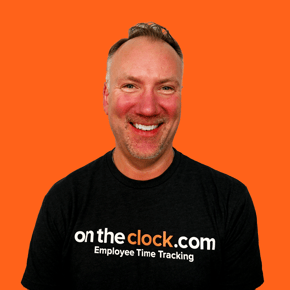
With more than 20 years of experience in the software-as-a-service industry, Dean has dedicated his career to building innovative products that solve real-world problems. He is equally passionate about creating a workplace where people feel supported, empowered, and able to reach their full potential.
A self-taught builder driven by curiosity and purpose, Dean believes the foundation of every successful business is its people, including their talent, passion, and potential.
Dean’s leadership philosophy emphasizes transparency, a people-first mindset, and a relentless pursuit of excellence. By encouraging experimentation, learning from failure, and adapting quickly, he ensures both the organization and its employees grow meaningfully. He often reminds teams that the job of leadership is to chart the course while nurturing a sense of purpose and belonging.
Passionate about staying ahead in the ever-evolving SaaS landscape, Dean combines visionary thinking with practical execution to differentiate products through technology and exceptional user experiences. By engaging directly with customers and prioritizing their needs, he drives innovation, strengthens long-term relationships, and ensures sustained value creation.
Beyond professional accomplishments, Dean is a dedicated mentor and advocate for lifelong learning, sharing insights to inspire the next generation of leaders and innovators. He remains committed to empowering others, making a positive impact, and connecting with curious minds eager to grow.