


Jump to section
Make Michigan ESTA Easier to Manage
Tracking earned sick time doesn’t have to add more administrative work. OnTheClock helps employers track hours, manage PTO, and keep accurate records in one place.
Try it Free!Michigan's Earned Sick Time Act (ESTA) requires almost every employer in the state to provide paid sick time. The amended law took effect Feb. 21, 2025, for employers with 11 or more employees and Oct. 1, 2025, for those with 10 or fewer. Employees earn one hour of paid sick time for every 30 hours worked. Employers can generally limit annual use to 72 hours, or 40 hours for small businesses.
ESTA closes a gap many workers still face. Nationally, 80% of private industry workers had access to paid sick leave in 2025, according to the Bureau of Labor Statistics. That leaves about one in five without it.
ESTA at a Glance
- ✔Who's covered: Employers with 11 or more employees since Feb. 21, 2025. Small businesses with 10 or fewer since Oct. 1, 2025
- ✔Accrual: One hour of paid sick time for every 30 hours worked
- ✔Annual use cap: 72 hours (11-plus employees) or 40 hours (10 or fewer). Employers can allow more.
- ✔Carryover: Up to 72 hours or 40 hours under the accrual method
- ✔Frontloading: Allowed instead of accrual, with no carryover required
- ✔New hires: Can be required to wait up to 120 days before using accrued time
- ✔Pay rate: The employee's normal wage or Michigan's minimum wage, whichever is higher
- ✔Payout at separation: Not required
What Is the Michigan Earned Sick Time Act?
The Earned Sick Time Act (Public Act 338 of 2018, as amended) is Michigan's sick time law. It requires employers to let employees earn paid time off (PTO) for their own health needs, a family member's care, safety needs related to domestic violence or sexual assault, and certain public health closures.
The current version took effect Feb. 21, 2025, when Gov. Gretchen Whitmer signed House Bill 4002. HB 4002 changed the original ballot-initiative law hours before it was set to take effect. ESTA covers full-time, part-time, and temporary employees. The main difference between employers is size: Businesses with 10 or fewer employees follow lighter rules and had a later start date.
Small vs. Large Employers: Who Counts?
Under ESTA, a small business is an employer with 10 or fewer employees. When you count, include:
- Full-time, part-time, and temporary employees
- Workers placed with you by a staffing agency
- All of your employees in the U.S., not just those in Michigan
- Owners who are also employees (owners who aren't employees don't count)
Losing small business status: If you have 11 or more employees for 20 or more workweeks in the current or previous calendar year, you're no longer a small business. That status lasts for the rest of the current year and all of the next year.
New businesses: A small business that first hired an employee after Feb. 21, 2022, doesn't have to provide sick time until three years after that first hire.
| Small business 10 or fewer employees |
Large employer 11 or more employees |
|
|---|---|---|
| Effective date | Oct. 1, 2025 Newer businesses: see above |
Feb. 21, 2025 |
| Accrual rate | One hour per 30 hours worked | One hour per 30 hours worked |
| Annual use cap | 40 hours | 72 hours |
| Carryover cap Accrual method |
40 hours | 72 hours |
| Frontload minimum | 40 hours | 72 hours |
Part-time employees can receive a prorated front-loaded amount. Source: Michigan Department of Labor and Economic Opportunity (LEO) ESTA FAQ.
How Employees Earn Sick Time: Accrual vs. Frontloading
ESTA gives employers two ways to provide sick time. You can let employees accrue it as they work, or you can frontload a full year's worth at once. Pick one method, put it in writing, and set up your time tracking and payroll to match.
Either way, you choose your own 12-month benefit year. That can be the calendar year, your fiscal year, or each employee's hire anniversary. You'll fill it in on the required poster.
Accrual
Employees earn one hour of paid sick time for every 30 hours worked. That's about 1.33 hours in a 40-hour week, or roughly 69 hours over a full year of 40-hour weeks.
- Existing employees began accruing on Feb. 21, 2025, (large employers) or Oct. 1, 2025, (small businesses)
- New hires start accruing on their first day
- Salaried exempt employees are presumed to work 40 hours a week. If their normal workweek is shorter, they accrue based on that
Carryover
Under the accrual method, unused sick time carries over to the next year, but you can cap carryover at 72 hours (40 for small businesses). You can also cap how much an employee uses in a year at the same amount. You're free to set higher limits if you want to be more generous.
Frontloading
Frontloading means giving employees their full year of sick time at the start of the benefit year: at least 72 hours, or 40 for small businesses.
- No accrual tracking, and no carryover or payout of unused time at year-end.
- No waiting period. The 120-day wait below applies only to the accrual method, so frontloaded time is available right away.
Waiting Period for New Hires
Employers using the accrual method can require employees hired on or after Feb. 21, 2025, to wait until their 120th calendar day before using sick time.
Usage Increments
Employees can use sick time in one-hour increments, or in the smallest increment your payroll system uses to track other absences. If you track PTO in 15-minute increments, sick time can be used in 15-minute increments, too.
Reasons Employees Can Use Sick Time
Under Michigan Compiled Laws (MCL) 408.964, employees can use earned sick time for:
- Their own health: A mental or physical illness, injury, or health condition, medical diagnosis, care or treatment, or preventive care
- A family member's health: The same needs for a family member, including preventive care
- Domestic violence or sexual assault: Medical care, counseling, victim services, relocation, legal services, or court proceedings for the employee or a family member
- A child's school or care meetings: Meetings about the child's health or disability, or the effects of domestic violence or sexual assault on the child
- Public health closures: when a public official closes the workplace, or a child's school or place of care, because of a public health emergency, or when health authorities determine the employee's presence would put others at risk because of exposure to a communicable disease
ESTA defines family member broadly. It includes children, parents, spouses and domestic partners, grandparents, grandchildren, siblings, anyone related by blood, and anyone "whose close association with the employee is the equivalent of a family relationship."
Notice and Documentation Rules
ESTA limits how much notice and paperwork you can require, so it's worth putting your rules in writing.
- Foreseeable absences (a scheduled appointment, for example): You can require up to seven days' advance notice.
- Unforeseeable absences: Employees must give notice as soon as practicable. Or, if you gave them a written policy at hire, they follow that policy once they know they need the time.
- Documentation: You can ask for reasonable documentation only when an employee uses sick time for more than three consecutive days. They have up to 15 days after your request to provide it, and you pay any out-of-pocket costs of getting it.
- What you can't ask for: Documentation can't be required to describe the illness or the details of domestic violence or sexual assault. You also can't delay the leave while you wait for paperwork.
So, can an employer deny sick time? Generally, no. If an employee has earned sick time available and uses it for an ESTA-covered reason, the employer must allow the leave as long as the employee complies with any lawful notice requirements. You can enforce your written notice policy, and you can discipline an employee who uses sick time for a reason ESTA doesn't cover.
Employer Compliance Requirements
Pay
- Pay sick time at the employee's normal hourly wage or base wage, or Michigan's minimum wage, whichever is higher
- You don't have to include overtime, holiday pay, bonuses, commissions, supplemental pay, piece-rate pay, tips, or gratuities
- Unused sick time doesn't have to be paid out when an employee quits or is let go. You can choose to pay it out in your own policy
Process
- Let employees use sick time in one-hour increments, or the smallest increment your payroll system tracks
- Don't require employees to find a replacement before they use sick time
- Keep health and domestic violence information confidential
Notice and posting
- Give each employee written notice of their ESTA rights at hire.
- Display the state ESTA poster where employees can see it. LEO offers it in English, Spanish, and Arabic, and it includes a line for your benefit year.
Recordkeeping
- Keep records of hours worked and sick time used for at least three years.
Who's excluded from ESTA:
- U.S. government employees
- Unpaid trainees and unpaid interns
- Workers covered by Michigan's Youth Employment Standards Act
- Employees who set their own schedules, when the employer can't take action against them for not working a minimum number of hours
- Elected officials and members of appointed public boards and commissions
Can an Existing PTO Policy Satisfy ESTA?
Yes. A PTO policy can count toward ESTA if it gives employees at least the same benefits. That means the same amount of time, usable for the same reasons, under the same conditions, and earned at the same rate or faster.
Do:
- Provide at least 72 hours a year (40 for small businesses), through accrual or frontloading
- Allow PTO for every ESTA reason, including family care, domestic violence or sexual assault
- Follow ESTA's notice, documentation, increment, and carryover rules for that time
Don't:
- Require more notice or documentation than ESTA allows
- Count ESTA-covered absences under an attendance-points or absence-control policy
- Limit how much PTO employees can use for ESTA reasons below ESTA's minimums
Not sure how PTO and sick time differ? See PTO vs. sick time.
Enforcement and Retaliation
Employees who believe their rights were violated can file a complaint with LEO's Wage and Hour Division within three years of the violation. The state can order payment of wrongfully withheld sick time, back pay, damages, and reinstatement. Employers who fail to provide sick time face a $1,000 administrative fine and possible additional civil fines. Each posting violation carries a $100 fine.
Under the amended law, employees can't sue employers directly. HB 4002 removed the private right of action, so complaints go through the state.
Retaliation is still prohibited. You can't discipline, fire, or otherwise penalize employees for using sick time or exercising their ESTA rights. HB 4002 removed the 90-day presumption of retaliation. It also confirmed that you can discipline employees who use sick time for reasons not covered by law.
ESTA Compliance Checklist
- Audit your headcount. Count every full-time, part-time, temporary, and staffing-agency worker across the U.S. to confirm whether you're a small business (10 or fewer) or a large employer (11 or more).
- Choose accrual or frontloading. Pick one, and set your 12-month benefit year.
- Review your PTO policy. Make sure it meets ESTA's requirements for amounts, reasons, notice, and documentation, or create a separate sick time policy.
- Configure your systems. Set the accrual rate, annual caps, carryover limits, and any 120-day waiting period in your time tracking and payroll software.
- Give notice and hang the poster. Give every employee written notice at hire, and display the state ESTA poster with your benefit year filled in.
- Train supervisors. Cover notice limits, documentation rules, and anti-retaliation, so a manager doesn't deny or punish protected sick time.
How to Track ESTA Sick Time
ESTA compliance comes down to accurate hours. If your hours worked are wrong, your accruals are wrong, and so is your sick pay.
Track Hours Worked to Calculate Accrual
Accrual is based on every hour worked, including overtime. Here's how it adds up:
| Hours worked | Sick time earned |
|---|---|
| 30 hours | One hour |
| 40-hour week | About 1.33 hours |
| 25-hour part-time week | About 0.83 hours |
| 2,080 hours (a full year at 40/week) | About 69 hours |
A reliable time tracking system records those hours automatically, so you're not calculating accruals by hand. To check the math, use the PTO calculator.
Set Caps, Carryover, and Waiting Periods
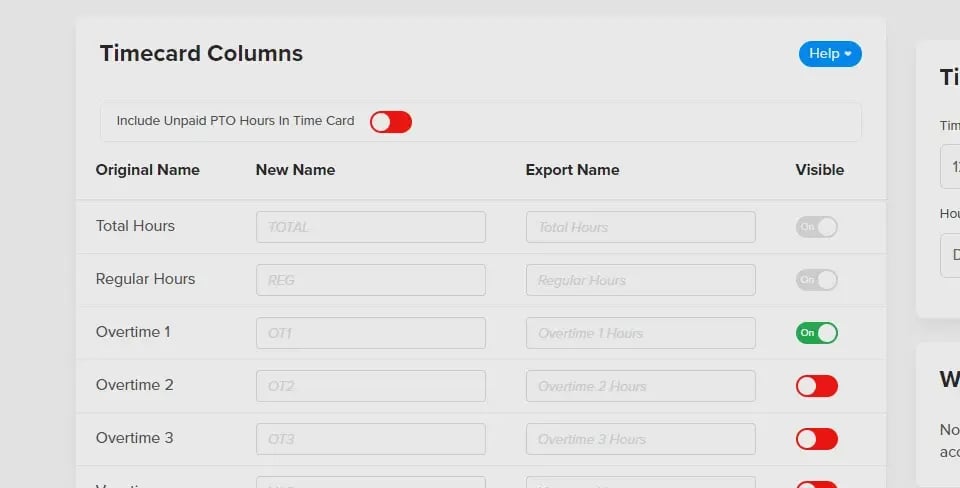
Your rules should live in your system, not in a spreadsheet. In OnTheClock's PTO tracker, you can set the accrual rate (one hour per 30 worked), limit carryover to 72 or 40 hours, and see every employee's PTO and sick leave balances in real time.
Connect Sick Time to Payroll
When sick hours flow straight into payroll software, they're paid at the right rate without re-keying. Reporting gives you the hours worked and sick-time records you need to keep for three years.
How Michigan's Paid Sick Leave Law Got Here
ESTA started as a 2018 ballot initiative. Rather than let it go to voters, the Legislature adopted it, then amended it the same session into the narrower Paid Medical Leave Act. In July 2024, the Michigan Supreme Court ruled in Mothering Justice v. Attorney General that this "adopt-and-amend" move was unconstitutional, which reinstated the original ESTA with a Feb. 21, 2025, start date. Lawmakers then passed HB 4002, signed Feb. 21, 2025, to revise the law before it took effect. A companion bill, Senate Bill 8, changed Michigan's minimum wage and tip credit rules the same day.
Michigan Earned Sick Time Act FAQ
Can an employer deny Michigan earned sick time?
Not if the employee has time available and uses it for a reason ESTA covers. Employers can require up to seven days' notice for foreseeable absences and follow a written notice policy for unforeseeable ones. They can request documentation after three consecutive days, and discipline employees who use sick time for reasons the law doesn't cover.
Is ESTA the same as PTO?
No, but a PTO policy can satisfy ESTA. ESTA sets minimum paid sick time for specific reasons. A general PTO policy counts if it provides at least 72 hours (40 for small businesses), can be used for every ESTA reason, and follows ESTA's accrual, notice, and documentation rules.
Does Michigan pay out PTO or sick time when you quit?
ESTA doesn't require employers to pay out unused sick time when an employee quits or is fired. For other PTO, such as vacation, payout generally depends on the employer's written policy or employment agreement. If a policy promises a payout, the employer is expected to follow it.
Can I cash out unused sick time in Michigan?
Only if your employer's policy allows it. ESTA doesn't give employees a right to cash out unused sick time, either during employment or when they leave. Under the accrual method, unused time carries over, up to the 72- or 40-hour cap. Under frontloading, the employer can reset balances each year without paying out.
How much sick time is required in Michigan?
Employees earn one hour of paid sick time for every 30 hours worked. Employers with 11 or more employees must allow employees to use at least 72 hours a year. Small businesses with 10 or fewer must allow at least 40. Employers can also frontload those amounts at the start of each year.
Do part-time employees get sick time under ESTA?
Yes. Part-time and temporary employees accrue sick time at the same rate as full-time employees: one hour for every 30 hours worked. Employers that frontload can give part-timers a prorated amount, as long as they give written notice of expected annual hours and the amount matches what the employee would have accrued.
Does sick time come back if an employee is rehired?
Yes, if you rehire them within two months. ESTA requires you to reinstate any accrued, unused sick time when the same employer rehires someone within two months of separation. The employee can use that time right away and keeps accruing more. This rule doesn't apply if you paid out the unused time when they left.
Do employment contracts signed before 2025 delay ESTA?
Sometimes. If you signed a contract with an employee on or before Dec. 31, 2024, it lasts three years or less, it conflicts with ESTA, and you notified LEO, ESTA applies when that contract expires. Employer policies an employee signed don't count. Union contracts follow a separate rule tied to the agreement's expiration date.
When did small businesses have to comply?
Small businesses with 10 or fewer employees had to start providing paid sick time on Oct. 1, 2025. A small business that first hired after Feb. 21, 2022, gets three years from that first hire. Employers with 11 or more employees have been covered since Feb. 21, 2025.
This article is for general information only and isn't legal advice. Rules can change, so check the Michigan LEO ESTA FAQ or talk with an employment attorney about your situation.