

Jump to section
Try OnTheClock Free
Save time and make payroll effortless with our easy-to-use, affordable employee time tracking app.
Try It FreeKey Takeaways
- ✔OnTheClock is the best pick for small medical practices. One plan at $5 a month plus $4 per user covers kiosk punches, IP and GPS limits, scheduling, PTO, and overtime alerts.
- ✔A shared front desk tablet invites time theft. A photo, PIN, or IP limit ties each punch to one person, so nobody clocks in for a coworker.
- ✔Nonexempt staff carry real compliance risk. Nurses, aides, and front desk clerks need overtime alerts and break tracking that follow state and federal labor law.
- ✔Mixed roles make payroll messy. Hourly clinical staff, front desk, and salaried providers all clock differently, so clean exports save the Friday rebuild.
- ✔Run two real quotes before you buy. Per-user and per-location pricing decide your true monthly cost, not the headline rate.
Can you prove how many hours your front desk clerk and your medical assistants actually worked last week? Most practice managers can't, not down to the minute. The best time tracking software for a medical practice keeps two things honest at once: accurate hours for every nonexempt nurse, aide, and front desk clerk, and a clean handoff to payroll. Nail that, and the Friday timecard scramble turns into a five-minute export.
A medical office runs on mixed hours. A nurse clocks in for a 7 a.m. shift, a medical assistant covers a split day, the front desk trades a lunch break, and a provider stays salaried on top of it all. When those punches live on paper or a shared screen, payroll night becomes a rebuild. Reviewers on G2 and Capterra keep raising the same three pains: staff punching in for each other on a shared front desk tablet, overtime and missed meal breaks that turn into compliance risk for nonexempt workers, and messy time sheets across roles and locations that wreck payroll.
One practice needs ironclad break tracking. Another just needs the front desk to stop covering for each other. Below are seven picks, each matched to a real clinic situation, with OnTheClock first.
What Medical Practices Actually Want From Time Tracking
Medical practices want proof first. A punch has to tie to a real person and a real role, not a shared tablet anyone can tap. That single need shapes almost every other choice on this list.
They also want hours that hold up to labor law. Nonexempt nurses, aides, and front desk staff trigger overtime and break rules, so the clock has to flag the 40-hour line and track meal periods. Clean payroll from the same punch keeps the office from sorting it out by hand.
And they want one honest view of a mixed team. Hourly clinical staff, front desk clerks, and salaried providers all clock differently, so the right pick shifts with whichever gap you feel most.
Quick Picks: The Best Time Tracking Software for Medical Practices at a Glance
-
OnTheClock: Best for small medical practices
-
Deputy: Best for labor law and break compliance
-
When I Work: Best for front desk shift scheduling
-
Homebase: Best for free time tracking
-
Connecteam: Best for multilocation practices
-
Buddy Punch: Best for stopping buddy punching
-
Jibble: Best free time tracking plan
How We Evaluated the Best Time Tracking Software for Medical Practices
We judged each tool on what actually matters in a clinic, not on feature-sheet length. We compared every option against the eight needs medical practices keep raising, what we call the OnTheClock Medical Practice Time Tracking Checklist:
-
Punch verification: a photo, PIN, IP limit, or facial check that stops one person clocking in for another.
-
Break and overtime rules: meal-break tracking and alerts that catch the 40-hour line for nonexempt staff.
-
Flexible punch methods: a front desk kiosk, a mobile app for floating staff, and a web punch.
-
Scheduling: drag-and-drop shifts for providers, nurses, and front desk coverage.
-
PTO tracking: time-off requests and balances for a team that books vacations months out.
-
Multilocation support: one clean view when a practice runs more than one office.
-
Payroll and accounting fit: clean exports to the tools you already run.
-
Honest pricing: a true monthly cost with no surprise base fees.
OnTheClock earns the small-practice spot here because it covers all eight needs in one base plan: kiosk and mobile punches, IP and GPS limits, scheduling, PTO, and overtime alerts, with none of the core features held back for a higher tier. That breadth at the base price is the basis for the small-practice label, not a ranking against the other picks. Each of the others serves its own situation best.
The Best Time Tracking Software for Medical Practices
Below, the best time tracking software for medical practices, with the right pick for each situation. For each one, we cover who it fits best, where it stands out, and where it may not be the right move.

OnTheClock: Best for Small Medical Practices
Available on: Web, iOS, Android
Why OnTheClock Is Best for Small Medical Practices
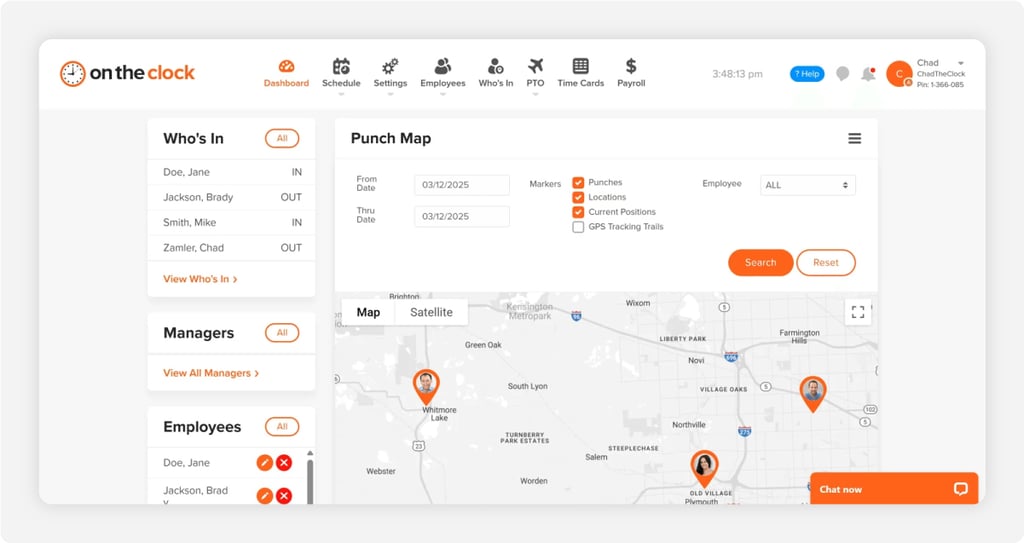
OnTheClock fits the family practice or specialty clinic that runs a small mixed team all day. It proves who punched in, schedules the week, tracks PTO, and exports clean hours, all from one plan. The buyer here is the office manager or owner who wears the payroll hat too.
It meets every need on the checklist in the base plan. A front desk kiosk with a PIN or photo stops buddy punching, IP and GPS limits keep punches at the office, and missed-punch alerts surface a problem before payday. More than 16,000 companies run on it, so the fit isn't theoretical. You can see how the same tools serve family practices and urgent care clinics in more detail.
Why OnTheClock Is Different
One plan, no fine print. It's $5 base a month plus $4 per user, and the clinic features come included, not gated behind a pricier tier. A 12-person practice pays $53 a month, and slow weeks don't sting because billing only counts active users.
Office managers who got burned by a heavier platform tend to land here for the simplicity. The honest trade-off: punches need an internet or Wi-Fi connection, and the reporting is lighter than an enterprise suite built for deep workforce analytics.
Key Features
Pros
Cons
Pricing
- 30-day free trial, no credit card
- $5 base a month plus $4 per user a month (see how OnTheClock pricing works)
- Optional payroll add-on: $40 base a month plus $6 per employee a month

Deputy: Best for Labor Law and Break Compliance
Available on: Web, iOS, Android
Why Deputy Is Best for Labor Law and Break Compliance
Deputy fits the practice with nonexempt clinical staff who clock real overtime and need their breaks tracked. Its scheduling and time clock build labor law and break planning into the shift, so a missed meal period gets flagged instead of buried. The buyer is the manager who loses sleep over a wage claim.
Its standout is that compliance engine, paired with a face-unlock kiosk on the Core plan that ends buddy punching. The caution is the spend. Monthly plans carry a $30 a month minimum, and biometrics plus the deeper compliance tools sit on Core rather than Lite. You can weigh it against other options in our Deputy alternatives guide.
Key Features
Pros
Cons
Pricing
- 31-day free trial
- Lite $5 per user a month, Core $6.50 per user a month, Pro $9 per user a month; $30 a month minimum spend on monthly plans

When I Work: Best for Front Desk Shift Scheduling
Available on: Web, iOS, Android
Why When I Work Is Best for Front Desk Shift Scheduling
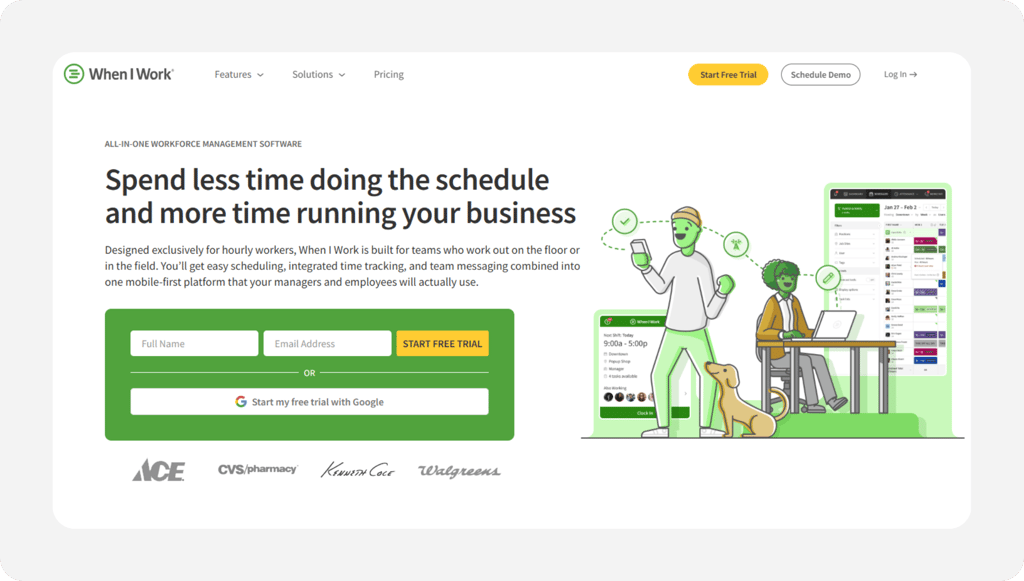
When I Work fits the practice whose biggest headache is building the weekly schedule and covering call-outs. Staff swap shifts, claim open slots, and message the office from one app, so front desk and clinical coverage sorts itself out fast. The buyer is the manager who rebuilds the schedule every week by hand.
Its standout is simple, quick scheduling with shift swaps and multi-location views. The caution matters for this list: time and attendance is a paid add-on on top of the plan, and the compliance engine is lighter than Deputy's. See how it stacks up in our When I Work alternatives guide.
Key Features
Pros
Cons
Pricing
- 14-day free trial, no credit card
- Essentials $2.50 per user a month, Pro $5 per user a month, Premium $8 per user a month; time tracking add-on $1.50 to $2 per user a month

Homebase: Best for Free Time Tracking
Available on: Web, iOS, Android
Why Homebase Is Best for Free Time Tracking
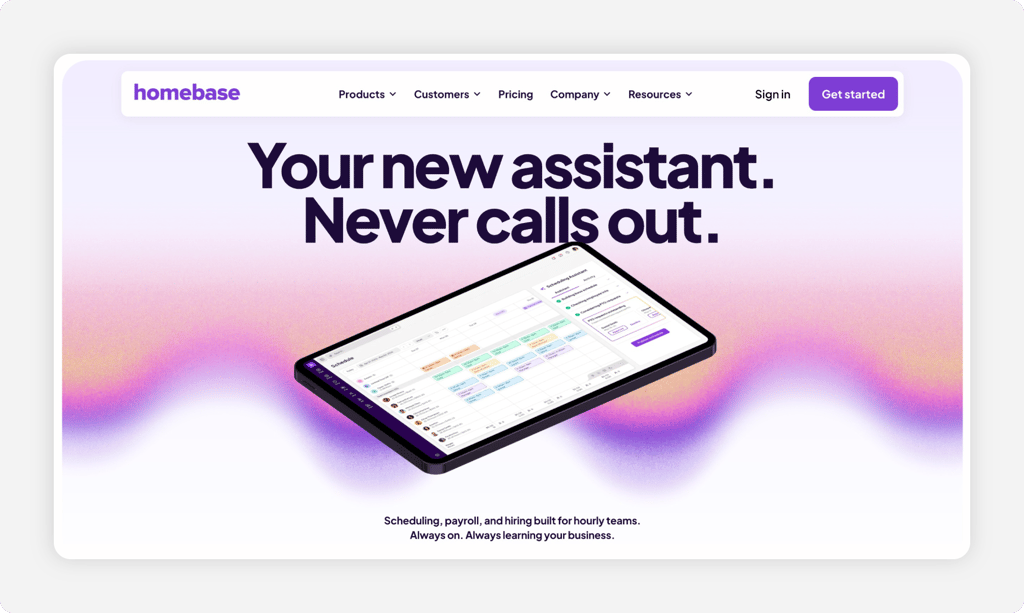
Homebase fits the single-office practice on a tight budget that still wants a real time clock. The free Basic plan covers one location and up to 10 employees, with clock-in on a tablet, computer, or POS device plus a weekly schedule. The buyer is the owner of a brand-new clinic counting every dollar.
Its standout is a genuinely free tier that does the basics well. The caution: the free plan holds time sheets only 90 days and stays at one location, while location-based mobile clock-in and a photo on each punch open up on the paid Essentials plan, and each office is billed separately.
Key Features
Pros
Cons
Pricing
- Free Basic plan for one location, up to 10 employees
- Essentials $24 per location a month billed annually ($30 monthly), Plus $56, All-in-One $96; payroll add-on $39 base a month plus $6 per employee

Connecteam: Best for Multilocation Practices
Available on: Web, iOS, Android
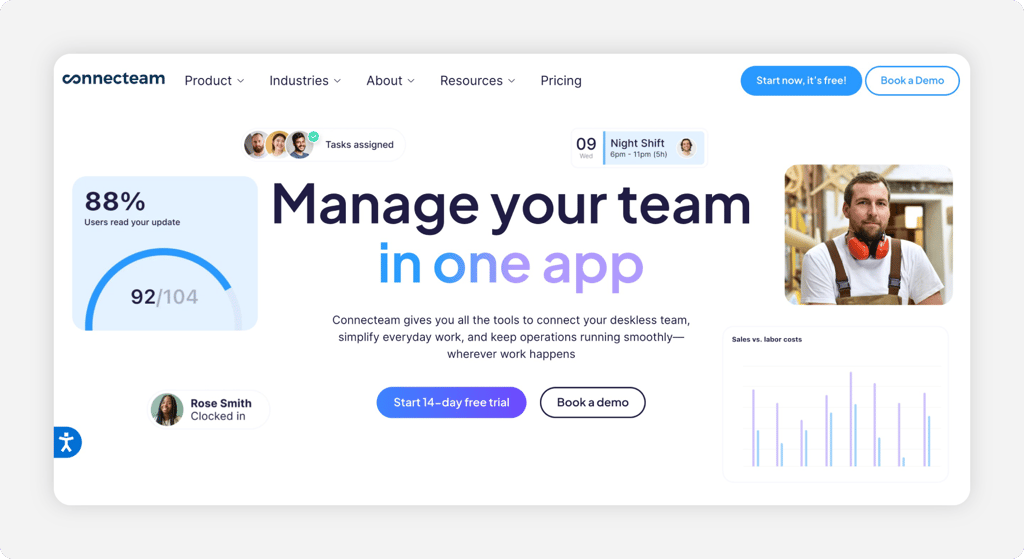
Why Connecteam Is Best for Multilocation Practices
Connecteam fits the practice group running several offices that wants the whole staff in one app. A GPS time clock with geofencing ties a punch to the right office, and chat, scheduling, and time off sit right next to it. The buyer is the operations lead juggling staff across more than one site.
Where it stands out is breadth for deskless teams and a free plan for up to 10 users. The caution shows up in the structure. Connecteam splits features across separate hubs, so a practice that wants time, chat, and HR may pay for more than one, and geofence limits tighten on lower tiers.
Key Features
Pros
Cons
Pricing
- Free Small Business plan for up to 10 users
- Paid Operations hub priced per hub for the first 30 users, then a small per-user fee beyond 30 (billed annually); higher tiers priced in-app

Buddy Punch: Best for Stopping Buddy Punching
Available on: Web, iOS, Android
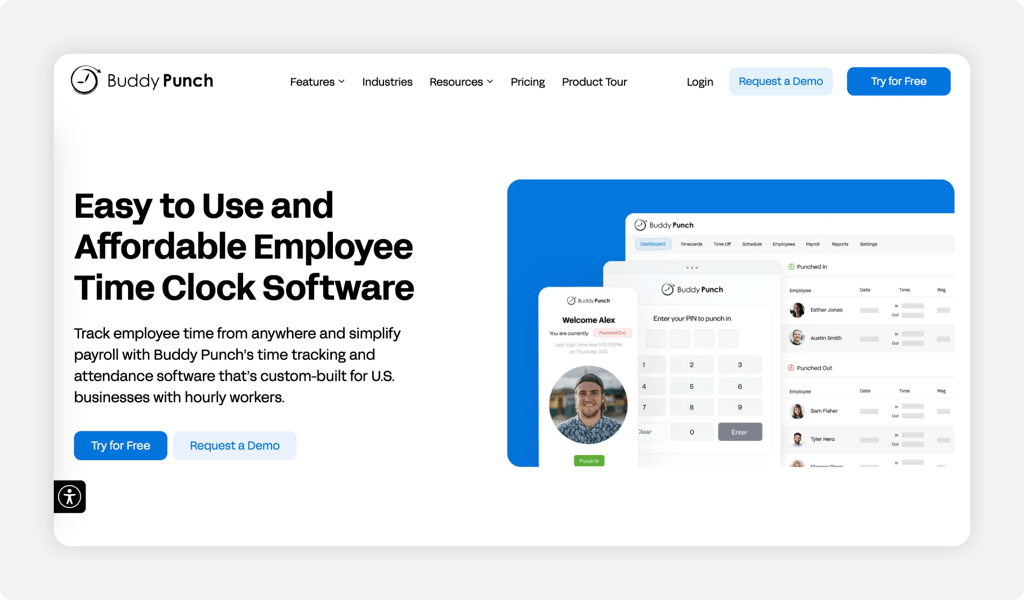
Why Buddy Punch Is Best for Stopping Buddy Punching
Buddy Punch fits the practice where a shared front desk tablet tempts staff to clock in for each other. The name says it all. Facial recognition and a photo on each punch match the face to the employee profile, so a punch belongs to the person standing there. The buyer is the manager tired of paying for hours nobody worked.
Its standout is that verification layer, paired with a GPS stamp on every punch and a clean, simple interface. The caution is the base fee. Every plan carries a $19 base a month, which stings a small team, and geofencing opens up on the Pro plan. See how it compares in our Buddy Punch alternatives guide.
Key Features
Pros
Cons
Pricing
- 14-day free trial, no credit card
- Starter $4.49 per user a month billed annually ($5.49 monthly), Pro $5.99 per user a month billed annually ($6.99 monthly), each plus a $19 base fee a month

Jibble: Best Free Option
Available on: Web, iOS, Android
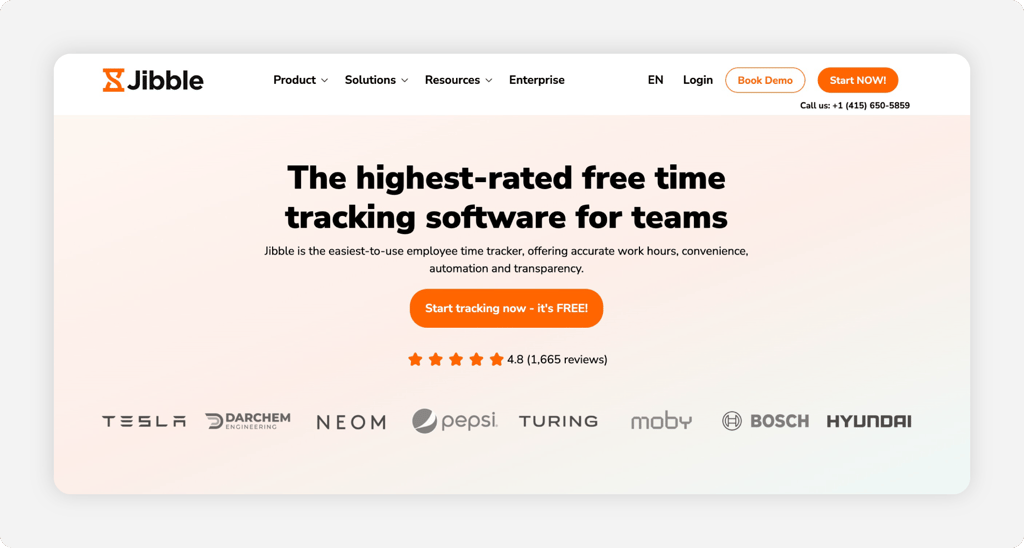
Why Jibble Is the Best Free Option
Jibble is the pick for a practice that wants a real time clock without a bill. It's free forever for unlimited staff, so a front desk team or a whole clinic can clock in and out at no cost. The buyer is the office manager who needs accurate hours but has no budget line for tracking software.
Its standout is the free plan paired with face recognition and GPS, so punches are tied to a real person at a real place. The honest caution is there's no built-in payroll, so you export hours to Gusto, QuickBooks, or ADP instead of running pay inside the app. The free plan also caps you at two geofences, and custom policies need a paid plan.
Key Features
Pros
Cons
Pricing
- Free forever for unlimited users
- Premium from $4.49 per user a month; Ultimate $7.99 per user a month
Side-by-Side Comparison
| Tool | Best For | Pricing | Key Strengths | Top Integrations |
|---|---|---|---|---|
| OnTheClock | Best for small medical practices | $5 base + $4 per user a month | Kiosk, IP and GPS limits, scheduling, PTO | Gusto, QuickBooks, ADP, Paychex |
| Deputy | Labor law and break compliance | $5 to $9 per user a month | Break planning, labor law compliance, biometrics | Gusto, QuickBooks, ADP |
| When I Work | Front desk shift scheduling | $2.50 to $8 per user + time add-on | Scheduling, shift swaps, GPS clock | QuickBooks, Gusto, Rippling |
| Homebase | Free time tracking | Free; paid from $24 per location a month | Free time clock, scheduling, location clock-in | Gusto, QuickBooks, ADP |
| Connecteam | Multilocation practices | Free; paid per hub | GPS clock, geofencing, chat, scheduling | QuickBooks, Gusto, Paychex |
| Buddy Punch | Stopping buddy punching | $4.49 per user + $19 base a month | Facial recognition, GPS punches | QuickBooks, Gusto, Paychex |
| Jibble | Free time tracking | Free; paid from $4.49/user | Face recognition, GPS, geofence clock-in | QuickBooks, Xero, Gusto, ADP |
Comparison data verified June 2026 against each vendor's own site; subject to change by respective providers.
What's the Best Time Tracking Software for a Medical Practice?
The best option isn't the longest feature list; it's the one that fits how your practice actually runs. Start with the single question that bugs you most, then pick.
- Need punch proof, scheduling, and PTO in one cheap plan? OnTheClock fits a small medical practice.
- Worried about overtime and missed breaks for nonexempt staff? Deputy builds the compliance in.
- Just want the front desk to stop covering for each other? Buddy Punch ties each punch to a face.
The right tool removes friction from the problem you hit most, not the one a sales demo wants to show you.
What Is Medical Practice Time Tracking Software?
Medical practice time tracking software is a digital clock that records when your staff start and stop work, and verifies who punched. It replaces paper, spreadsheets, and a shared sign-in sheet with punches that carry a timestamp and an identity.
For this audience, it adds the parts a basic clock skips: a kiosk or photo punch that stops buddy punching, break and overtime rules for nonexempt staff, and a clean export to payroll. The simple point is honest hours you can prove.
Who Needs Time Tracking Software in a Medical Practice?
Any practice with hourly staff benefits. Family practices, dental offices, urgent care clinics, physical therapy groups, and specialty offices all gain the most once they run more than a couple of nonexempt employees. The math changes the moment overtime and breaks enter the picture.
Think front desk clerks, medical assistants, nurses, and billing staff who clock real hours. If you're chasing missing punches, fixing time sheets, or worrying about a break violation, you're the audience.
Why Medical Practices Rely on Time Tracking Software
A medical office lives and dies by accurate hours, because payroll and compliance both ride on them. A wrong number means a short paycheck, a payroll fix, or a wage claim. Federal law backs this up: the Fair Labor Standards Act requires employers to keep accurate daily and weekly hours for every nonexempt worker.
The old way, paper and memory, breaks the moment a staffer disputes a check or a state auditor asks about meal breaks. A real clock with verified punches replaces the guesswork and gives you a record. See how OnTheClock handles online time tracking for a mixed clinic team.
Key Features Medical Practice Time Tracking Software Should Have
Before you compare prices, make sure any tool covers the basics for a clinic with mixed roles.
-
Punch verification: a photo, PIN, IP limit, or facial check that stops one person clocking in for another.
-
Break and overtime rules: meal-break tracking and alerts that catch the 40-hour line for nonexempt staff.
-
Front desk kiosk and mobile punch: a tablet at the desk and a phone clock for floating staff.
-
Scheduling and PTO: shift coverage for providers and nurses plus time-off tracking.
-
Multilocation view: one clean account when you run more than one office.
-
Payroll export: clean hours that move into Gusto, QuickBooks, ADP, or your own payroll.
How to Choose the Proper Time Tracking Software for Medical Practices
Step 1: Count your staff and offices, then do the pricing math.
Start with real numbers. Count the hourly staff you run in a busy week and the offices they work in, because per-user and per-location pricing decide your true cost, not the headline rate.
Run two quotes side by side. A 12-person practice on OnTheClock is $5 base plus 12 times $4, so $53 a month. A free tool like Jibble tracks the same team at no cost, no matter the head count. Favor tools that bill only for active users, since clinic head count shifts with the season.
Step 2: Name the one problem that costs you most.
Pick one. Buddy punching, break and overtime compliance, payroll rework, and multioffice chaos each point to a different tool, and chasing all four at once leads to an overbuilt plan you won't use.
Write the top problem down before you demo anything. If it's time theft, weight punch verification. If it's compliance, weight break and overtime rules. The named problem keeps a slick sales call from steering you toward features you don't need.
Step 3: Match the punch method to how your clinic works.
A front desk needs a tablet kiosk with a PIN or photo. Floating staff who move between rooms or offices need a one-tap phone punch. A provider who runs salaried may not punch at all.
Test the punch on your real devices before you roll it out. A clock that's clumsy on a phone or tablet gets skipped, and a skipped punch is the missing hour you'll hunt for on payday.
Step 4: Lock down who is really punching.
This is where clinic dollars leak. A shared front desk tablet lets one person clock in for another, and those few minutes a day add up across a whole staff over a year.
Ask for a photo, PIN, facial check, or an IP limit that ties the office network to the punch. Tools like Buddy Punch and OnTheClock both verify the person, so a punch belongs to the staffer standing there, not a teammate doing a favor.
Step 5: Get overtime and break rules right for nonexempt staff.
Nonexempt nurses, aides, and front desk clerks earn overtime past 40 hours in a week, and many states require a paid or unpaid meal break for longer shifts. A clock that ignores this hands you a compliance risk.
Pick a tool that flags the 40-hour line before it hits and tracks meal periods. Deputy builds labor law and break planning into the shift, and OnTheClock sends overtime alerts in the base plan, so a long week surfaces while you can still fix the schedule.
Step 6: Plan for more than one office.
One office is simple. Two or more change the math, because some tools bill per location and others bill per user, and a multioffice practice can pay very differently under each.
If you run several sites, weight a single account that shows every office at once. Connecteam ties a punch to the right office with geofencing, while a per-location tool like Homebase charges again for each address, so price the structure, not just the sticker.
Step 7: Check the payroll and accounting connection.
Trace one hour from punch to paycheck. Confirm the tool exports to the payroll you run, whether that's Gusto, QuickBooks, ADP, or Paychex, and run a test export during the trial.
If you keep your books in QuickBooks, a native sync saves a step, but it also assumes you pay for that subscription. A file that needs hand-editing every week is a hidden labor cost, so price that time in too.
Step 8: Run a full pay period on a free trial before you commit.
Put one team on the tool for a complete pay cycle, punch to payroll. Most of these picks offer a free trial, OnTheClock for 30 days with no credit card, so the test costs nothing but your attention.
Time the approvals, count missed punches, check how fast support answers, and add up the true monthly cost with your real head count. The tool that survives one honest payroll run is the one to buy.
Tips for Implementing Time Tracking Software in a Medical Practice
-
Set up the front desk kiosk first. Lock in a PIN or photo punch before you invite staff, so the very first punch already carries an identity.
-
Train on the device staff will use. Your front desk punches on a tablet and your floating aides punch on a phone, so walk each group through the screen they'll actually tap.
-
Keep records for the legal minimum. The U.S. Department of Labor's recordkeeping rules say to hold payroll records for three years and time cards for two, so pick a tool that stores history that long.
Frequently Asked Questions
What is the best time tracking software for medical practices?
OnTheClock is the best time tracking software for small medical practices. One plan at $5 base a month plus $4 per user covers kiosk and mobile punches, IP and GPS limits, scheduling, PTO, and overtime alerts, with no core features held back for a higher tier. Practices that worry most about labor law may prefer Deputy for break compliance, while a brand-new clinic on a tight budget can start with Homebase for free.
How do medical practices stop staff from punching in for each other?
They verify the person at the punch. A photo, PIN, facial check, or an IP limit ties each clock-in to one employee, so a shared front desk tablet can't log hours for an absent coworker. Buddy Punch uses facial recognition and a photo on every punch, and OnTheClock adds IP and GPS limits plus a kiosk PIN, which together end most buddy punching in a clinic.
Is there free time tracking software for a medical practice?
Yes. Homebase offers a free Basic plan for one location and up to 10 employees, with a time clock on a tablet or computer plus scheduling. Connecteam is free for up to 10 users and adds GPS and geofencing. OnTheClock isn't free, but its 30-day trial with no credit card lets a practice run a full pay period at no cost before deciding.
Does time tracking software help a medical practice stay compliant with break and overtime rules?
Yes. The right tool tracks meal breaks and flags the 40-hour overtime line for nonexempt staff before payday. Deputy builds labor law and break planning into the schedule, and OnTheClock sends overtime alerts in its base plan. The software gives you the record, but compliance with federal and state labor law stays the practice's responsibility.
How much does time tracking software for a medical practice cost?
Most tools charge a per-user rate, often with a base fee. OnTheClock is $5 base a month plus $4 per user. Deputy runs $5 to $9 per user, while Jibble is free forever for unlimited users. Homebase is free for one small office and then bills per location, while Connecteam offers a free plan for up to 10 users.
Does medical practice time tracking software connect to payroll?
Yes. OnTheClock exports to Gusto, QuickBooks, ADP, Paychex, and SurePayroll, and offers its own payroll add-on for a $40 base plus $6 per employee. Jibble exports hours to QuickBooks, Xero, Gusto, and ADP, and Deputy connects to Gusto, QuickBooks, and ADP. Clean exports keep the same hours feeding both pay and your records.
Stop guessing who actually clocked in.
Verify punches, track breaks, and run clean payroll for your medical practice with OnTheClock.
No credit card required, and you'll be set up in minutes.