

Jump to section
Try OnTheClock Free
Save time and make payroll effortless with our easy-to-use, affordable employee time tracking app.
Try It FreeYes, employers must pay employees for all hours worked, even if a time sheet is submitted late. Under the Fair Labor Standards Act (FLSA) and its recordkeeping rules in the Code of Federal Regulations (29 CFR Part 516), employers are responsible for tracking hours and paying nonexempt workers accurately.
This guide covers what employers should do when a time sheet is missing. It also explains what to do if you forgot to submit yours, and how to keep late time sheets from disrupting payroll again.
The Big Picture
-
It's an employer's responsibility under the Fair Labor Standards Act to pay workers on time and maintain proper records, including time sheets.
-
Employees who submit late time sheets could be subject to disciplinary action, but can take swift action to correct an oversight.
-
The best way to prevent late time sheets is a solid time tracking system that minimizes human errors and streamlines time sheet submissions.
So, a Time Sheet Is Late. What Happens Next?
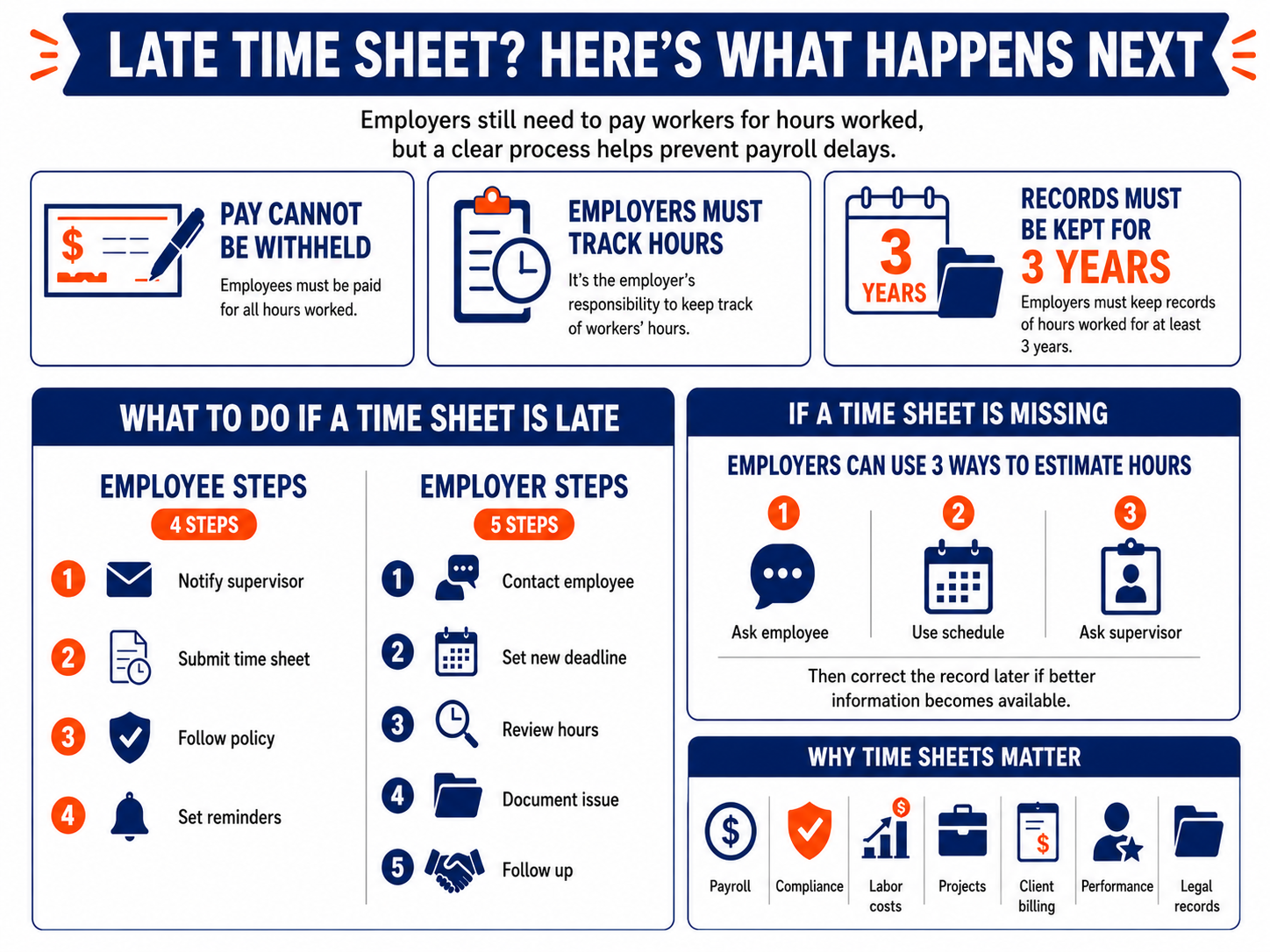
Just because a time sheet is late doesn't mean an employer has a right to withhold — or even delay — a worker's wages. Ultimately, it's the employer's responsibility to keep track of workers' hours.
Federal recordkeeping requirements vary by the type of record. Under the FLSA, employers generally must keep payroll records for at least three years. Records used to calculate wages — including time cards and work schedules — should be kept for at least two years. State laws may require employers to keep records longer.
Tired of Last-Minute Time Sheets?
OnTheClock makes time tracking easy, so you're not rushing to finish payroll at the last minute.
How Do You Pay an Hourly Employee When You Don't Know How Many Hours Were Worked?
As previously mentioned, it's the employer's responsibility to make sure employees are paid for hours worked. But without a time sheet, keeping this record will be difficult. If this is your scenario, here are some options.
-
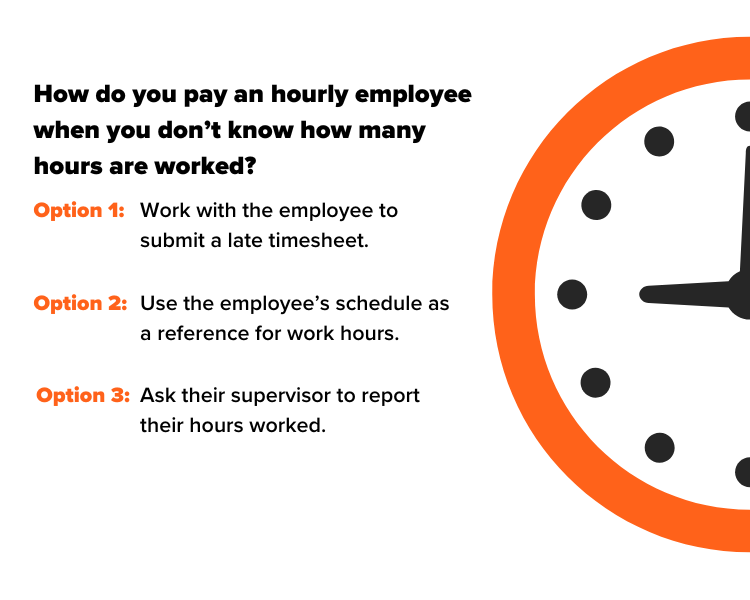
Option 1: Work with the employee to submit a late time sheet.
-
Option 2: Use the employee's schedule as a reference for work hours.
-
Option 3: Ask the individual's supervisor to report their hours worked.
The easiest option is for employees and supervisors to work together to submit the late time sheet. If that isn't possible, employers can use the employee's schedule as a starting point, along with supervisor reports and other available records, to estimate hours worked. Any discrepancies should be corrected promptly, and employers must account for all hours actually worked, including overtime.
Is It Legal to Delay Pay Because of a Late Time Sheet?
No. In most cases, employers must pay employees for all hours worked, even if a time sheet is submitted late. Under the Fair Labor Standards Act (FLSA), employers are responsible for maintaining accurate time records and paying nonexempt employees on time. While an employee may face disciplinary action for repeatedly submitting late time sheets, an employer generally cannot withhold earned wages for failure to submit a time sheet by the deadline.
What to Do if You Forget to Submit Your Own Time Sheet
If you forget to submit your time sheet, don't panic. It's important to navigate the situation with a professional attitude. Everyone makes mistakes, but it takes maturity to own up to them with grace.
So, if your time sheet is late, will you still get paid? Under the Fair Labor Standards Act, an employer can't deny pay for actual hours worked. That said, a late time sheet submission can create practical challenges for payroll and may require a later adjustment if the hours initially paid don't match the hours actually worked.
Here's how to handle the situation so you can get paid the correct amount on time.
Step 1: Notify Your Supervisor Immediately
It's best practice to notify your supervisor in writing of any time sheet tardiness. We recommend sending a polite email. Include an apology for the oversight as well as an explanation, if necessary.
Step 2: Submit Your Time Sheet Promptly
Better late than never! Be sure to complete your time sheet and submit it as soon as you can. Double-check that your hours are accurately filled out and include a note, if applicable.
Step 3: Adhere to Your Company's Policy
Your employer may have a procedure in place that addresses what to do in the event of late time sheet submissions. Be sure to follow these timekeeping requirements to the letter. For example, you may have to fill out additional paperwork when submitting a time sheet after its due date.
Step 4: Learn From the Mistake
Submit your time sheet late once, and it'll be chalked up to human error. But you'll want to make sure it doesn't happen again. Set a time sheet reminder, like a recurring calendar notification, to prevent this situation from recurring.
What to Do if Your Employee Forgets to Submit Their Time Sheet
If an employee forgets to submit a time sheet, try to act within 24 to 48 hours. That gives payroll time to check the hours before the next payroll cutoff. Hopefully, they will remember and reach out to fix the situation. If not, you'll need to track it down.
It's an employer's responsibility to keep track of hours worked for nonexempt employees. Additionally, you're legally obligated to pay employees for all hours worked, regardless of any errors. We'll explain more about this later, but first, here are the steps you should take when employees forget their time sheets.
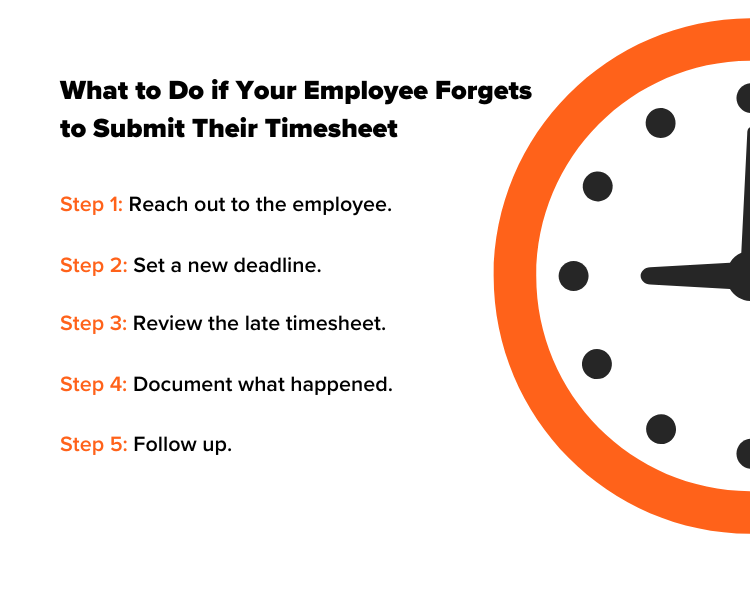
Step 1: Reach Out to the Employee
Give your employee a friendly reminder about the missed time sheet submission. Politely ask whether the employee needs assistance with completing or submitting the time sheet. Additionally, make sure they have access to the necessary resources, such as login credentials for your company's time tracking software.
Step 2: Set a New Deadline
When you connect with the employee, set a new timeframe for the time sheet submission. For example, if you connect at the beginning of the shift, ask them to submit hours worked by the end of the day. Record this deadline in writing so that everyone's on the same page.
Step 3: Review the Late Time Sheet
Once your employee submits the time sheet, give a quick once-over. You'll want to make sure it's correctly filled out to prevent any further delays. If you notice something is missing, reach out to the employee for clarity before submitting it to ADP, Gusto, QuickBooks, or your payroll provider.
Step 4: Document What Happened
Once the time sheet has been submitted, you should document what happened. Include the date the employee submitted the time sheet, as well as the date it was forwarded for payroll processing. This documentation will be helpful if any compliance issues arise or if this becomes a recurring performance issue.
Step 5: Follow Up
If your timekeeping procedures set consequences for late submissions, apply them consistently and fairly. Also, use the chance to coach the employee on why deadlines matter. Then ask them to come up with a plan to keep it from happening again.
Why Time Sheets Matter
If you're working with an employee who chronically submits late time sheets, you may start to question the value of time sheets altogether. However, they're actually pretty important. Here are some of the reasons why.
-
Accurate payroll. While a work schedule tells you when to report to work, time sheets provide a record of the actual hours worked by employees. They help ensure employees are paid accurately by accounting for overtime, compensable breaks, and other time-related factors that affect hourly compensation.
-
Labor cost analysis. Time sheets help businesses analyze and understand labor costs. By tracking hours worked, companies can build stronger teams and see which projects, departments, or tasks make money. This information helps with budgeting, cost control, and decisions like hiring.
-
Labor law compliance. Time sheets play a big role in following labor laws. Accurate time records help you pay employees correctly and meet rules like minimum wage and overtime regulations. They also help you meet federal recordkeeping standards (and some states have stricter ones).
-
Project management. For project managers, time sheets are a big help with resource planning. They show how much time goes to each project, task, or client. That makes it easier to track progress, estimate workloads, and find ways to be more productive.
-
Client billing. For businesses that invoice clients on an hourly basis, time sheets are essential. They provide a transparent breakdown of billable hours and serve as supporting documentation for client billing, promoting trust and accountability.
-
Performance evaluation. Depending on what data they include, time sheets can help you evaluate employee performance. At a minimum, they show attendance records. But they can also track time spent on different tasks and client projects, which helps managers spot strengths and weaknesses and build better teams.
-
Legal protection. Because time sheets are a legal record of hours worked, they can be invaluable if a dispute comes up. They give you proof of work hours for issues like overtime, leave, and attendance. And they help you comply with federal labor laws.
In short, it's not enough to simply make a mental note of when your employees worked. Accurate records of employees' hours are important for payroll and FLSA compliance, particularly for nonexempt workers.
Why Late Time Sheets Are Becoming Less Common
Not long ago, employees often used paper time sheets, spreadsheets, or punch cards to track their hours. Those methods left plenty of room for missed deadlines, forgotten entries, and payroll delays. Today, better time tracking tools are helping businesses cut down on these problems.
Modern time tracking systems let employees clock in and out from mobile apps, web browsers, tablets, and shared kiosks. Instead of filling out a time sheet at the end of the pay period, hours are recorded as work happens. That means more accurate records and less paperwork for employees and managers alike.
Real-time attendance tracking takes this a step further. Managers can review punches as they happen, spot missing clock-ins, and fix problems before payroll begins. Automated reminders help, too. They prompt employees to review and approve their hours before payroll deadlines.
Payroll integrations make things even simpler. Instead of collecting and typing in time sheets by hand, you can transfer approved hours directly into your payroll system. That means fewer data-entry errors, and employees get paid correctly and on time.
With automated time tracking, employees don't have to remember to submit time sheets at all. Hours are recorded as people work, so they're ready for payroll review in real time. OnTheClock combines time tracking, attendance monitoring, automated reminders, and payroll integrations. So you can spend less time chasing time sheets and more time on your employees and customers.
How to Prevent Late Time Sheets
If you want to prevent late time sheets, the best strategy is to take the pressure of time sheets off your employees' plates. Regardless of whether or not that's an option, you'll also want to emphasize the importance of deadlines and accountability. This will benefit not only your time tracking strategy but also your workplace culture.
Three Tips for Timely Time Sheets
-
Clear communication and expectations. Everyone should be well aware of the importance of submitting time sheets on time. Communicate not only deadlines but also the impact of late submissions on payroll processing, project management, and overall business operations. Set clear expectations for the consequences of late submissions (which can be included in your time tracking policy).
-
Send reminders. Send email reminders 24 to 72 hours before a time sheet deadline. This gives employees enough time to review and submit their entries. You can also schedule automated reports so managers can spot missing hours early. Follow up with employees who are often late, and keep an open line of communication so workers can tell you about any roadblocks.
-
Automated time tracking systems. The easiest way to get your time sheets on time is to let the software automate the process. Choose a system that offers features, like automated reminders, mobile accessibility, and easy submission methods (e.g., online forms, mobile apps), to make it convenient for employees to submit their hours worked. Streamlining the submission process reduces barriers, increases compliance, and saves time (time is money, after all).
What Happens if Payroll Is Already Processed?
Discovering a missing time sheet after payroll has already been processed can create complications, but it doesn't eliminate an employer's obligation to pay employees for all hours worked. The best course of action depends on your company's payroll procedures, state laws, and the amount of unpaid wages involved.
One option is to run an off-cycle payroll. This allows employers to issue a separate payment for the missing hours rather than waiting until the next scheduled payday. While this approach may involve additional processing fees, it can help ensure employees receive their wages promptly and maintain compliance with applicable wage-payment laws.
In some situations, employers may be able to include the missing hours on the employee's next paycheck. However, state laws vary regarding when earned wages must be paid. Employers should review applicable wage-payment requirements before delaying payment until the next pay period.
Regardless of how the correction is handled, it's important to document the situation thoroughly. Keep records of when the missing time sheet was discovered, how the employee's hours were verified, when the correction was made, and any communication with the employee regarding the issue. Accurate documentation helps maintain compliance, supports payroll accuracy, and provides an audit trail if questions arise later.
The best way to avoid payroll corrections is to identify missing time records before payroll is finalized. Modern time-tracking software can help by providing real-time visibility into employee hours, automated reminders, and approval workflows that reduce the risk of missing time sheets.
This article is for general information only. It isn't legal advice. Wage-payment and recordkeeping rules vary by state, so check with your state labor department or a wage-and-hour attorney if you're not sure what applies to you.
Upgrading Your Time Tracking System
If time sheet submission is a consistent problem for you, it's time to check the method. Your time tracking system may itself be the issue — not your employees.
If you're using paper time sheets, have your employees leave them in a central area at their worksites. That way, your payroll personnel can retrieve them on a designated date. The downside of this is that paper time sheets are prone to human error, and picking them up by the deadline can be a hassle.
If you're tracking time sheets digitally, you'll need software to automate the process. Electronic time clocks can help. Cloud-based time clock software, such as OnTheClock, is a more convenient alternative because it can be used on any device.
Online time clocks can be accessed anywhere there's an internet connection. Time clocks, like OnTheClock, are fully customizable to meet your business's unique needs and can be configured to work at specific job sites. Most importantly, they eliminate the need for your employees to manually submit time sheets — simply send their records to your payroll provider when they're due.
OnTheClock is priced to be affordable for growing businesses. Our support team is available by phone, chat, text, and email to help you set up your account the way you need it. Your first 30 days are free — no credit card is required. Give it a try and see how easy time sheets can be.
Frequently Asked Questions
Who's Responsible for Keeping Track of Hours Worked?
It's an employer's responsibility to keep track of workers' hours. While you can delegate this task to employees and let them self-report on their time sheets, you still have a legal obligation to maintain records of how much they were paid. That's why it's important to address late time sheets as soon as possible and implement a time tracking system that minimizes the risk of late submissions.
Can an Employer Withhold Pay for Hours Worked Due to Late Time Sheets?
No. An employer cannot withhold pay just because an employee submits a late time sheet. While you may rely on employees to self-report their hours, it's ultimately the employer's responsibility to ensure workers are paid correctly on designated paydays. So, if a time sheet is missing, employers should work with the employee or supervisor to verify hours worked, use available records to make a reasonable estimate when necessary, and correct any discrepancies as soon as possible.
Is It Ever OK to Change Your Employee's Time Sheet?
Yes, in certain situations. Under the Fair Labor Standards Act, it's the employer's responsibility to maintain accurate records of hours worked and paid. So, employers may need to occasionally change time sheets to fix mistakes or fill in missing hours.
For example, if your employee forgets to clock in or out, you'll need to fill in the blanks. However, modifying a worker's time sheet to pay them less than they've earned is wage theft, which is unethical and illegal. You can only change time sheets when correcting errors, not to withhold pay.
What Happens if I Submit My Time Sheet Late?
You still get paid for the hours you worked. Your employer can't hold back earned wages because of a late time sheet. But your pay may be based on your schedule and corrected on a later paycheck, and repeated late submissions can lead to discipline. Tell your supervisor right away and submit it as soon as you can.
Is It Illegal for Payroll to Be Delayed?
It can be. Under the Fair Labor Standards Act, wages are due on the regular payday for the pay period they cover. Overtime can be delayed only as long as it reasonably takes to calculate it. Many states also set their own payday rules, and some add penalties for late pay, so check with your state labor department.
What Are the Legal Requirements for Time Sheets?
Federal law doesn't require a specific time sheet format or tracking method. Under the FLSA, employers must keep accurate records of hours worked each workday and workweek, plus wages paid each pay period. Time clocks, apps, and written time sheets all work, as long as the records are complete and accurate. Some states have stricter rules.
Do I Get Paid if I Forget to Clock In?
Yes. If you worked, your employer has to pay you for that time, even if a punch is missing. Let your supervisor know as soon as you notice, and give them your actual start or end time. Your manager can then fix the time card so your hours and paycheck are correct.